Last updated October 31, 2026
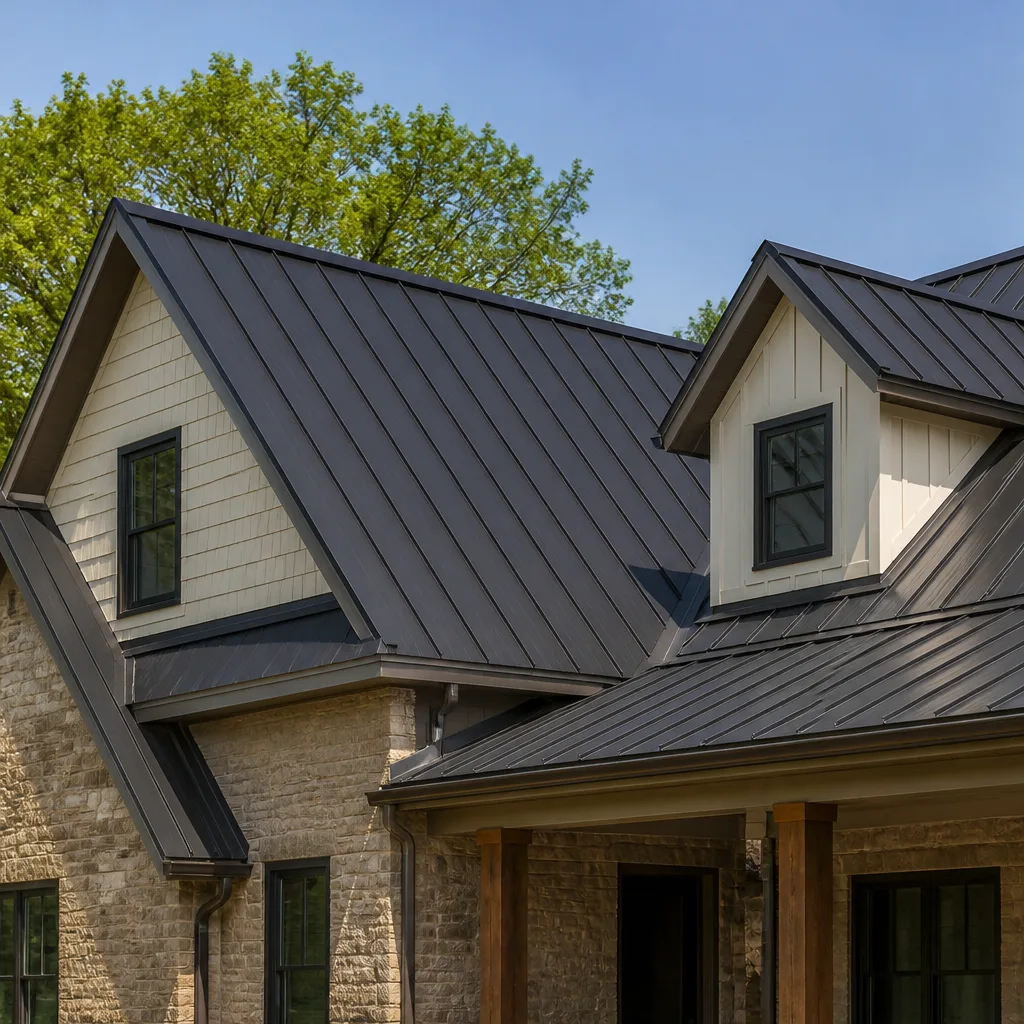 Metal roofing
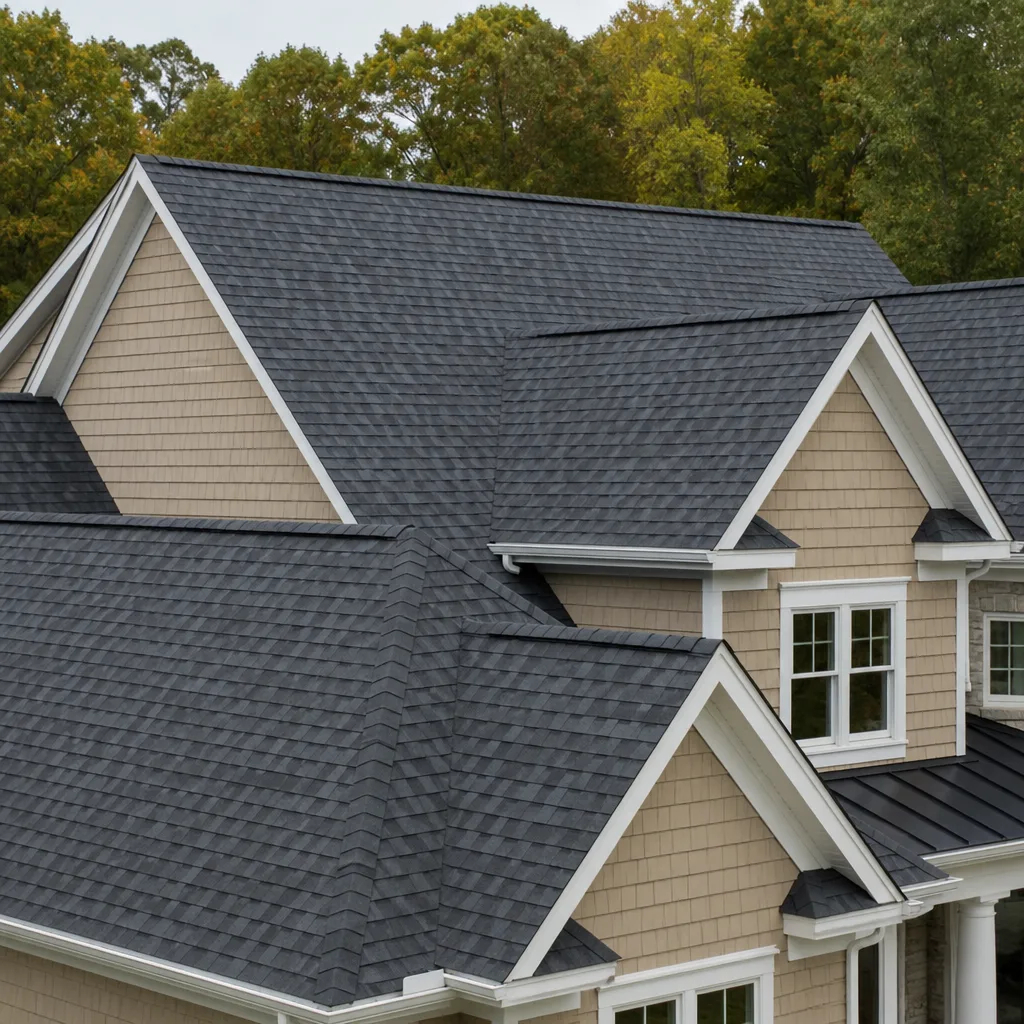 Architectural shingles
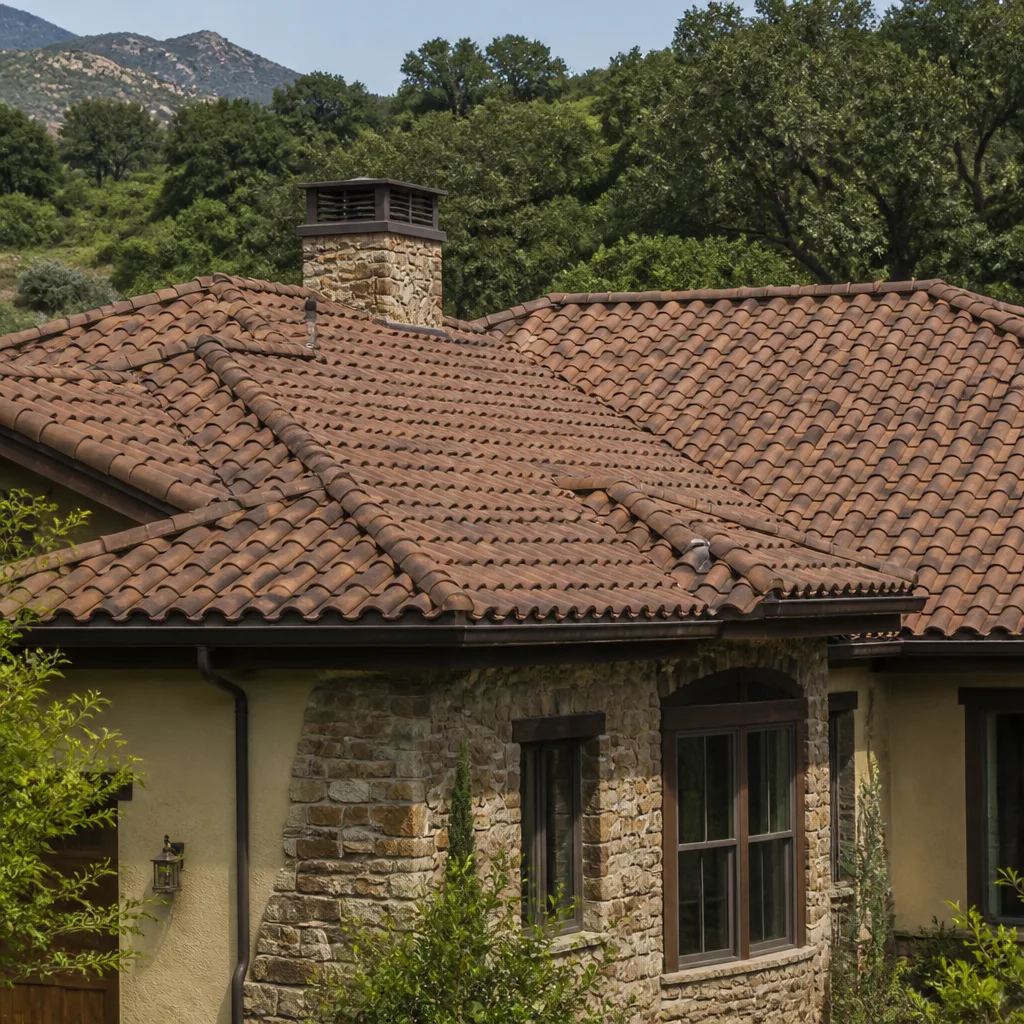 Tile roofing
 GAF
 Owens Corning
 Flat & low-slope
Free roof inspection with deck photos before we talk money - GAF and Owens Corning certified installation
Roofing Permits, Codes & Inspections in CA: What You Need to Know
Most homeowners in San Bernardino County never think about the layered permitting system that governs a simple roof replacement until something goes wrong. A few years back, we watched a homeowner in Victorville put a new roof on their house, only to have the county flag the job because the fire-hazard-zone classification for their parcel required a different underlayment than what their contractor installed. The roof had to come off. The whole thing. That’s a $9,000 mistake that a permit check would have caught in ten minutes. This guide maps out how California state code, San Bernardino County amendments, and local fire-hazard-severity zones actually stack up, so you can navigate a roofing project in Victorville without learning the hard way, and you can find more guides & resources on our blog.
Quick Answer
Most roof replacements on residential homes in California require a building permit, and in San Bernardino County that permit comes with a specific inspection sequence you cannot skip. The county adds stricter fire-resistant construction requirements in high-severity zones, which include parts of Victorville, and California’s Title 24 energy code applies to re-roofing projects as well. Get the permit before work starts, have inspections done at every required hold point, and you avoid tear-off risks, resale problems, and insurance claim denials.
Styles & brands we work with
Table of Contents
- When a Roofing Project Needs a Permit vs. When It’s Repair
- San Bernardino County Fire-Hazard-Severity Zones and What They Mean for Victorville Roofs
- Title 24 Cool-Roof Rules: What Applies to Re-Roofing
- The Inspection Hold-Point Sequence: What Gets Checked Before the Next Phase
- How Material Choice Affects Code Compliance
- What Happens When Unpermitted Roofing Work Surfaces During a Home Sale
- What Permits Cost and How Long They Take in San Bernardino County
- Common Mistakes to Avoid
When a Roofing Project Needs a Permit vs. When It’s Repair
California Building Code section 105.1 is clear on the basics: any work that involves the structural alteration of a building requires a permit. A full roof replacement that removes the existing roof covering down to the sheathing is structural work. It requires a permit, full stop. But the line between “repair” and “replacement” is where we see the most confusion among homeowners in Victorville and across the High Desert.
Here is the practical framework that governs most residential roofing decisions:
- Repair exemption: Patching a small section of shingles, sealing a localized leak, or replacing a few damaged tiles generally falls under “minor repair” and does not require a permit, provided the work does not change the roof’s assembly or structural components. The key word is localized. If the repair covers less than roughly 10% of the roof surface, most jurisdictions treat it as maintenance.
- Like-for-like replacement: Removing and replacing the entire roof covering with a materially identical product (same type, same weight class) still requires a permit in San Bernardino County because you are disturbing the roof assembly. Some counties in other states treat like-for-like as exempt. San Bernardino does not.
- Any change in material type: Switching from asphalt shingles to tile, tile to metal, or wood shake to anything modern always requires a permit. Changing material type changes the structural load on the roof deck, which requires a structural review.
- Sheathing replacement: If the contractor discovers rotted plywood or OSB and replaces decking panels, that is structural work and requires both permit notation and an inspection before the new roofing material covers it.
- Re-roof over existing: Some jurisdictions allow a single overlay of a second shingle layer without tearing off the first. San Bernardino County generally does not allow overlays in designated fire-hazard zones, which includes substantial portions of Victorville and the surrounding unincorporated areas.
The “like-for-like is narrower than you think” problem trips up homeowners who assume that because they are putting the same color shingle back on, no permit is needed. What matters is whether the roof assembly (deck, underlayment, covering) is being altered or exposed, not whether the new material looks the same. If you strip the roof to fix what’s underneath, you have entered permit territory.
When we perform a Roof Inspection in Victorville, one of the first things we assess is whether the existing roof was installed under a properly permitted project. It matters for what we can do next.
San Bernardino County Fire-Hazard-Severity Zones and What They Mean for Victorville Roofs
California’s Department of Forestry and Fire Protection (CAL FIRE) maintains Fire Hazard Severity Zone (FHSZ) maps that classify land as Moderate, High, or Very High fire hazard. San Bernardino County adopts these maps into its building code. Parts of Victorville, particularly areas that border open space or sit closer to the foothills, fall within High or Very High severity zones, which we cover in our Roofing Warning Signs: A Victorville Homeowner’s Reference Guide. What that means in practical terms: the county can require a Class A fire-rated roof assembly where a more basic assembly would pass in other parts of the state.
Here is what the FHSZ designation changes for a roofing project:
- Underlayment requirements: Very High severity zones require a specific type of underlayment (typically a fiberglass-reinforced product meeting ASTM D6757 or equivalent) under the visible roof covering. Standard felt paper is not acceptable in these zones.
- Roof covering fire rating: The roof assembly must achieve a Class A fire rating, which limits the types of materials and installation methods. Most modern asphalt shingle systems from GAF, CertainTeed, and Owens Corning meet Class A when installed over the correct underlayment, but the underlayment spec is what changes.
- Valley metal and flashing details: Some high-severity zones require metal valley liners of a minimum gauge, and the county checks these at inspection. A contractor doing a standard valley weave may fail inspection if the metal spec is not present.
- Gutter and eave conditions: While gutters are not part of the roofing permit scope, the county’s fire code can flag dry debris accumulation during inspection. This is a homeowner maintenance item but worth knowing before you schedule your final.
If your Victorville home sits south of Bear Valley Road or near the Mojave Narrows area, check your FHSZ designation before you get bids. A contractor who only does roofs in flatland Phelan or Apple Valley may not realize that a Victorville address half a mile away is in a more restrictive zone. The permit application itself will trigger the zone review, but you want to know before you sign a contract, not after.
Title 24 Cool-Roof Rules: What Applies to Re-Roofing
California’s energy code (Title 24, Part 6) applies to re-roofing projects, not just new construction. The main requirement is that the new roof covering meet a minimum solar reflectance and thermal emittance standard, depending on your climate zone. Victorville sits in Climate Zone 14, which is a hot-dry climate, and the cool-roof requirements are in full effect here.
For residential steep-slope roofs (pitched roofs, not flat), the practical rules look like this:
- Aged solar reflectance: The roof covering must have an aged solar reflectance of at least 0.20 and a thermal emittance of at least 0.75, OR the product must be listed in the Cool Roof Rating Council (CRRC) directory with a CRRC-rated value that meets the standard.
- Material types that already satisfy it: Most asphalt shingle lines from GAF, CertainTeed, IKO, and Owens Corning offer a CRRC-listed color in the “cool” range, but not every color in every line passes. A dark charcoal shingle may not meet the reflectance threshold.
- Tile and metal: Concrete and clay tile products with a natural light color generally pass. Metal roofing with a painted finish in a light or “cool” color spectrum passes easily.
- Exemptions: There are limited exemptions for certain historic properties and for roof areas that are shaded by structures or trees for most of the day, but claiming these exemptions requires documentation, and the county will ask for it.
The Title 24 requirement is a material-specification issue, not a construction-method issue, as detailed in our Seasonal Roofing Care for Victorville: Year-Round Homeowner’s Guide. This is where carrying multiple brand lines matters. We can give a Victorville homeowner a specific CRRC-listed color from GAF or CertainTeed that meets Title 24 without forcing them into a product they did not choose. A contractor locked into one brand may have fewer compliant color options, especially at the darker end of the palette. Owens Corning and IKO both maintain full CRRC listings, so the conversation becomes about color preference within the compliant range, not about whether your preferred roof passes code.
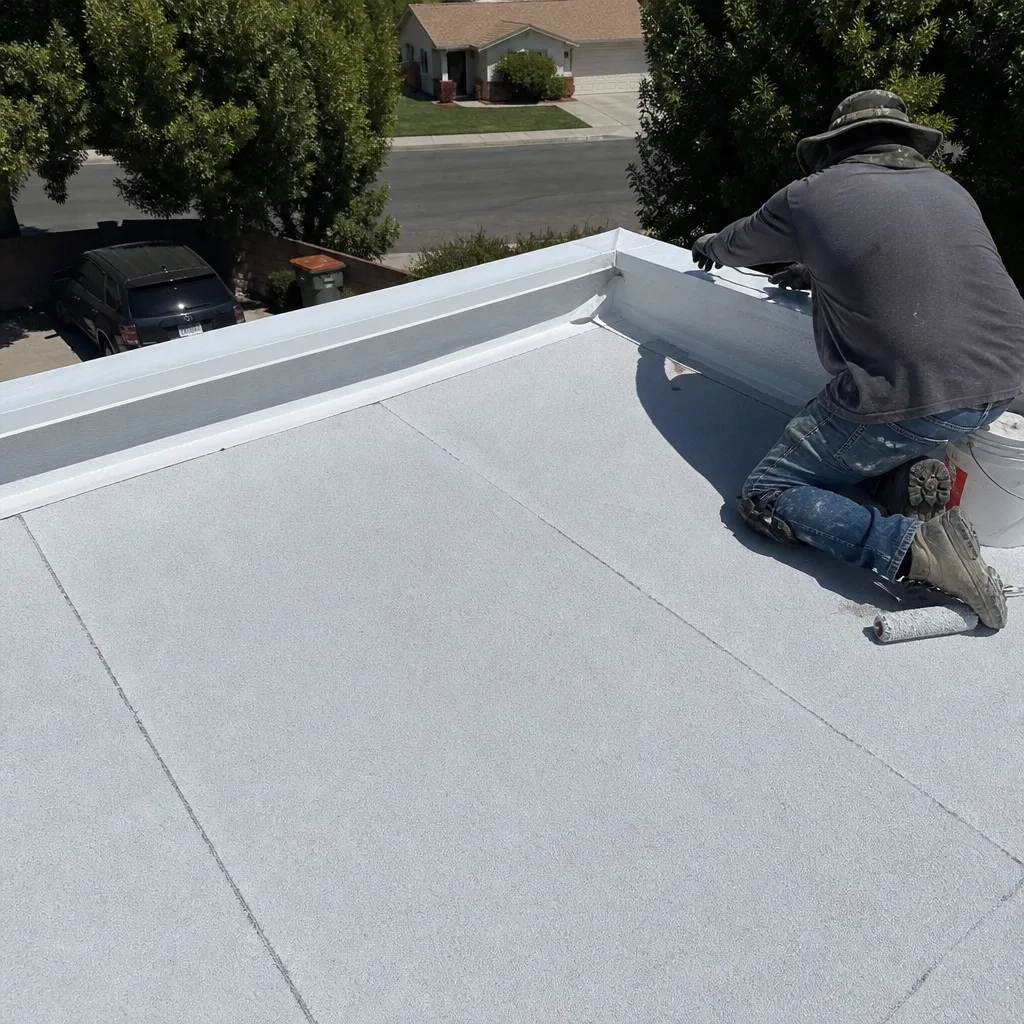
For flat or low-slope roofs, the cool-roof story is different: the requirement is more aggressive, and most conventional built-up roofs require a reflective coating or a modified bitumen product with a white or highly reflective cap sheet. Most Victorville homes have pitched roofs, but some mid-century ranches in the older neighborhoods near 7th Street and along Amargosa have low-slope sections that fall into this category.
The Inspection Hold-Point Sequence: What Gets Checked Before the Next Phase
This is the section that saves people from the tear-off scenario we described in the opening. San Bernardino County’s building department requires inspections at specific points in a roofing project, and you cannot cover the next phase until the inspector signs off on the current one. Miss a hold point, and the county has the authority to require removal of completed work to expose the unchecked layer.
Here is the typical inspection sequence for a full residential re-roof in Victorville:
- Permit issuance: Before any work starts. The permit application includes the roof assembly spec (underlayment, covering, fire rating), the product data sheets for the materials being installed, and the FHSZ determination for the parcel.
- Deck inspection (if sheathing is replaced): If tear-off reveals rotted or damaged decking, the contractor must stop and call for an inspection before installing new sheathing or covering the old. The inspector will check the nailing pattern, panel thickness, and attachment method.
- Underlayment inspection (required in FHSZ zones): In High and Very High severity zones, the underlayment must be inspected before the visible roof covering goes on. The inspector checks the product type, the overlap, and the fastener pattern. This is the hold point that surprises out-of-area contractors, because many counties do not require it.
- Final inspection: After the roof covering is installed, the inspector checks the complete assembly: shingle or tile installation, flashing details, valley construction, ridge ventilation, and edge metal. This is a visual inspection of the finished roof from the ground and, where accessible, from the roof surface.
We have watched this sequence go wrong enough times to know the pattern. A contractor from outside the area completes the underlayment and the shingles in one push, calls for final inspection, and the inspector asks where the underlayment hold-point approval is. There is no answer. The county then requires a random-cut inspection: the inspector selects a section, the contractor cuts into the finished roof to expose the underlayment, and if it is wrong, the whole roof comes off. Not a hypothetical. It happens every year in Victorville.
This is also why our Roof Repair in Victorville work starts with a clear conversation about what triggered the repair and whether the underlying assembly has ever been properly inspected. If the original roof was unpermitted, the repair is still legitimate, but the long-term fix may require bringing the whole assembly up to code.
How Material Choice Affects Code Compliance
The material you put on your roof is not just an aesthetic decision. It drives the structural load calculation, the fire-rating path, and whether the Title 24 cool-roof requirement is satisfied without extra engineering. Understanding how those interact will save you from selecting a roof that fails permit review.
Consider the main residential roofing material categories in the Victorville market:
- Asphalt shingles: The dominant choice for High Desert homes. Architectural shingles from GAF, CertainTeed, Owens Corning, and IKO all offer Class A fire-rated assemblies when installed over the correct underlayment. The load is modest. The Title 24 compliance depends on the specific color’s CRRC listing. Most budget-friendly and the easiest to permit.
- Concrete and clay tile: Common on newer Victorville construction and on Mediterranean-style homes across the High Desert. Tile is heavy. The roof structure must be engineered for the extra dead load, which often means a structural review even when replacing existing tile. Tile offers inherent fire resistance and generally good cool-roof performance in light colors.
- Metal roofing: Standing-seam and stone-coated metal are growing in popularity. Metal is light, carries an excellent fire rating, and paints well under Title 24. The permit conversation is often simpler on the fire side but can involve wind-uplift evaluation in exposed locations near the Victor Valley’s wind corridors.
- Wood shake and shingle: Essentially prohibited in new construction in FHSZ zones and difficult to justify in any re-roof in San Bernardino County. Fire code has effectively eliminated this as a realistic option for most Victorville homes.
The point is not that one material is always right. The point is that the material choice is governed by the permit department, not just by the homeowner’s preference. A brand portfolio that spans all of these material types, which is the model we work with at Oakmont Roof Repair home, means the material conversation starts from “what does your roof need and what does the county require” rather than “what do we have in the warehouse.”
What Happens When Unpermitted Roofing Work Surfaces During a Home Sale
This is where unpermitted roofing work goes from a quiet secret to a five-figure problem. When a home in Victorville sells, the buyer’s home inspection routinely flags the roof. If the seller cannot produce a permit and a final inspection sign-off for a roof that was visibly replaced within the last decade, the transaction hits a wall.
The typical remediation path looks like this:
- Buyer’s inspection flags the roof condition or age. The inspector requests documentation of when the roof was installed and whether permits were pulled.
- Seller cannot produce permits. The roofing job was done cash by a contractor who did not pull one. Now the seller has a disclosure problem and a negotiation problem.
- Buyer demands a permit retrofit or a price reduction. The retrofit process involves applying for an “as-built” permit, which requires exposing sections of the roof assembly for inspection. If the assembly does not meet current code (old underlayment, wrong fire rating, no Title 24 documentation), the county can require a full replacement.
- The cost lands on the seller. The seller either pays for a retrofit inspection and possible replacement, or concedes the repair cost as a price reduction. In a slow market, the buyer wins this negotiation. In a fast market, the seller might still take a haircut to close.
We see the cost difference play out constantly. A permitted re-roof with correct inspections might cost $10,000 to $18,000 on a typical Victorville home. The same roof done unpermitted might save $1,500 to $2,500 in permit and inspection costs upfront. But at resale, the retrofit inspection, the potential partial tear-off, and the seller’s lost negotiating position can easily run two to five times the original permit savings.
For a homeowner planning to stay in the home for 20 years, the resale problem feels distant. But insurance claims have the same documentation trigger. If a wind event damages a roof, the adjuster will ask for permit history. An unpermitted roof can give the insurer grounds to limit or deny the claim, because the installation was never verified. The permit is not a formality. It is the proof that your roof is real.
If you are inheriting an unpermitted roof situation, the first step is a professional condition assessment. Our Roof Replacement in Victorville service often starts with exactly that conversation: what is here now, what needs to come up to code, and what the retrofit path actually costs versus a clean replacement.
What Permits Cost and How Long They Take in San Bernardino County
Permit costs for a residential re-roof in San Bernardino County are set by a valuation-based fee schedule, which means the fee scales with the declared project cost. For a typical single-family home re-roof in Victorville, expect to pay somewhere in the range of $350 to $800 in total permit and inspection fees. A large home with a high-value roof system (tile or standing-seam metal) can push toward $1,000. These are county fees only; they do not include the contractor’s time for plan preparation, product data sheets, or inspection scheduling.
Timeline expectations:
- Permit application review: 5 to 15 business days for a standard re-roof with complete documentation. FHSZ review and structural review (if tile is involved or decking is being replaced) can add a week.
- Inspection scheduling: Typically 1 to 3 business days for a requested inspection. San Bernardino County uses an online scheduling system, and roofing inspections are generally scheduled quickly because they are short field visits.
- Total project permit timeline: A smooth re-roof with correct documentation adds about 3 to 4 weeks of calendar time when you include permit review and inspection sequencing. Not months. The timeline is not the problem. The paperwork completeness is.
The most common delay we see is not slow county review. It is incomplete product documentation. If the contractor submits a permit application without the manufacturer’s data sheets, the CRRC certification for the specific color, and the FHSZ documentation, the application gets bounced back and the clock restarts. A contractor who does Victorville roofs regularly already has this library built out for the brands they install.
Common Mistakes to Avoid
- Assuming like-for-like means no permit. San Bernardino County does not exempt like-for-like full replacements from the permit requirement. If the roof is coming off, the permit is required.
- Choosing a roof color before checking Title 24 compliance. Not every color in every shingle line meets the cool-roof reflectance standard. The dark charcoal you loved in the showroom may not pass permit review in Victorville’s climate zone.
- Hiring a contractor who does not know the FHSZ map. A contractor working across the county line may not realize that a Victorville address is in a stricter fire zone. The permit application will catch it, but you want the contractor to know before the bid, not after the underlayment is installed.
- Letting the crew cover the underlayment before the inspection. In High and Very High severity zones, the underlayment hold point is mandatory. Skipping it is the single most expensive mistake we see in Victorville roofing projects.
- Not keeping the permit card and final inspection record. The final inspection sign-off is what you produce at resale and to your insurer. Lose it, and the permitted roof is only as good as your ability to prove it was permitted.
- Treating the permit as an optional add-on in the bid. Any contractor who suggests you can “skip the permit to save money” is asking you to absorb legal, insurance, and resale risk so they can close a cheaper number. Walk away.
- Not checking whether the existing roof was permitted before adding a second layer. If the first roof was installed unpermitted, adding a permitted overlay does not retroactively fix the original problem. The underlying unpermitted assembly is still unpermitted.
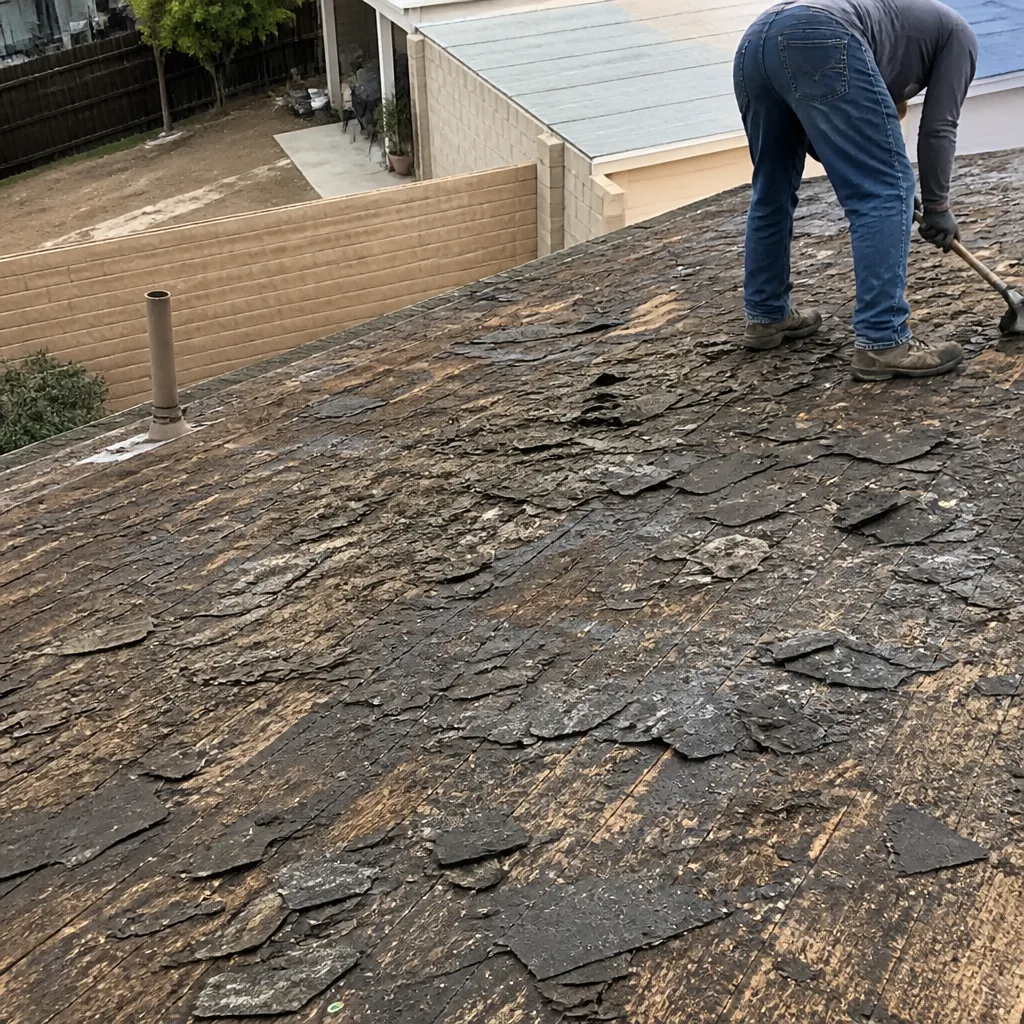
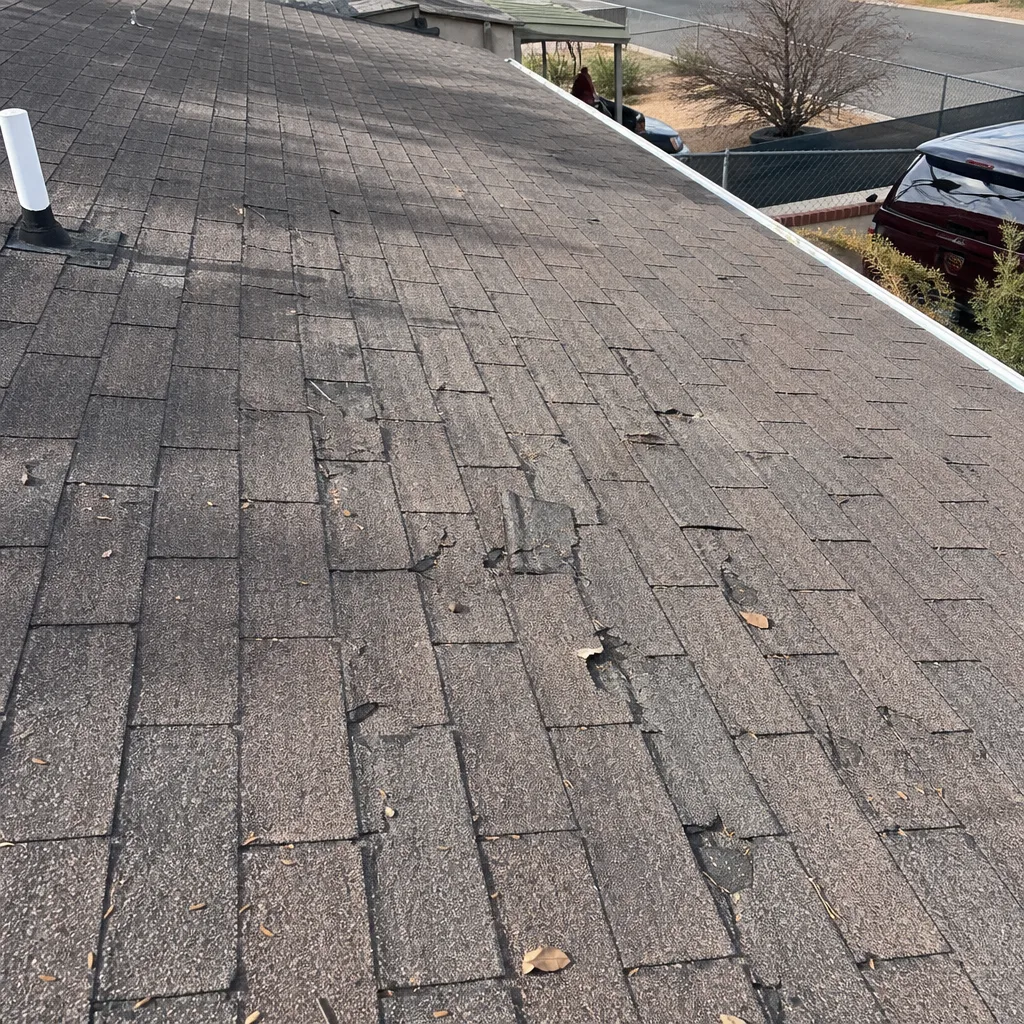
See the difference
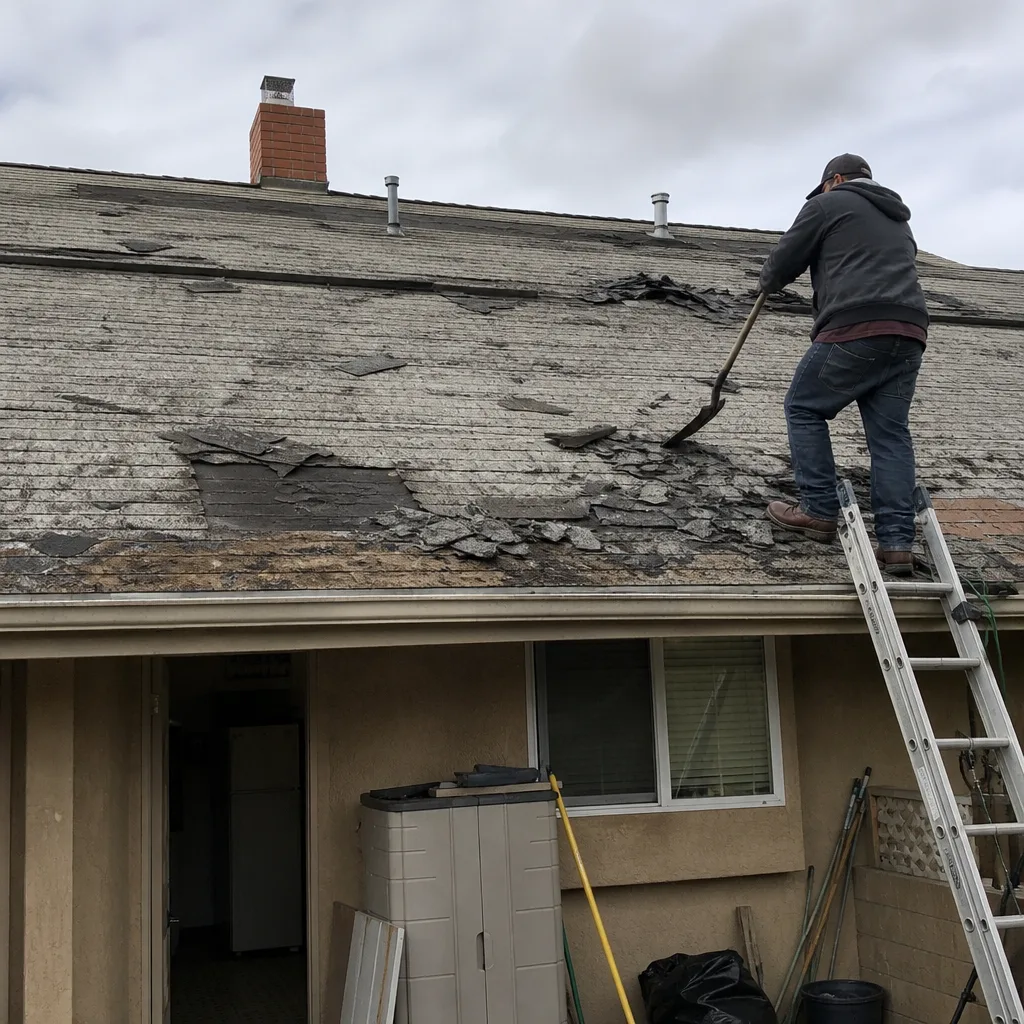 Before
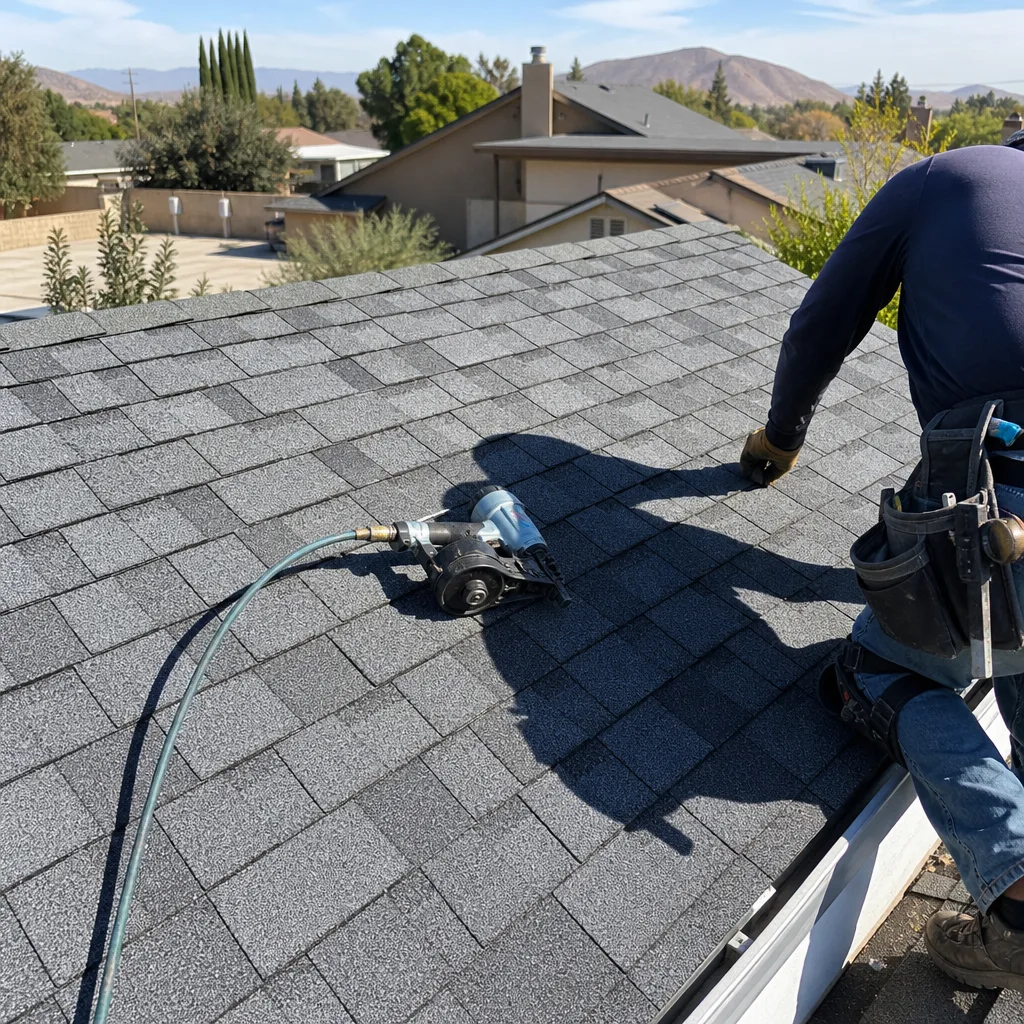 After
 Before
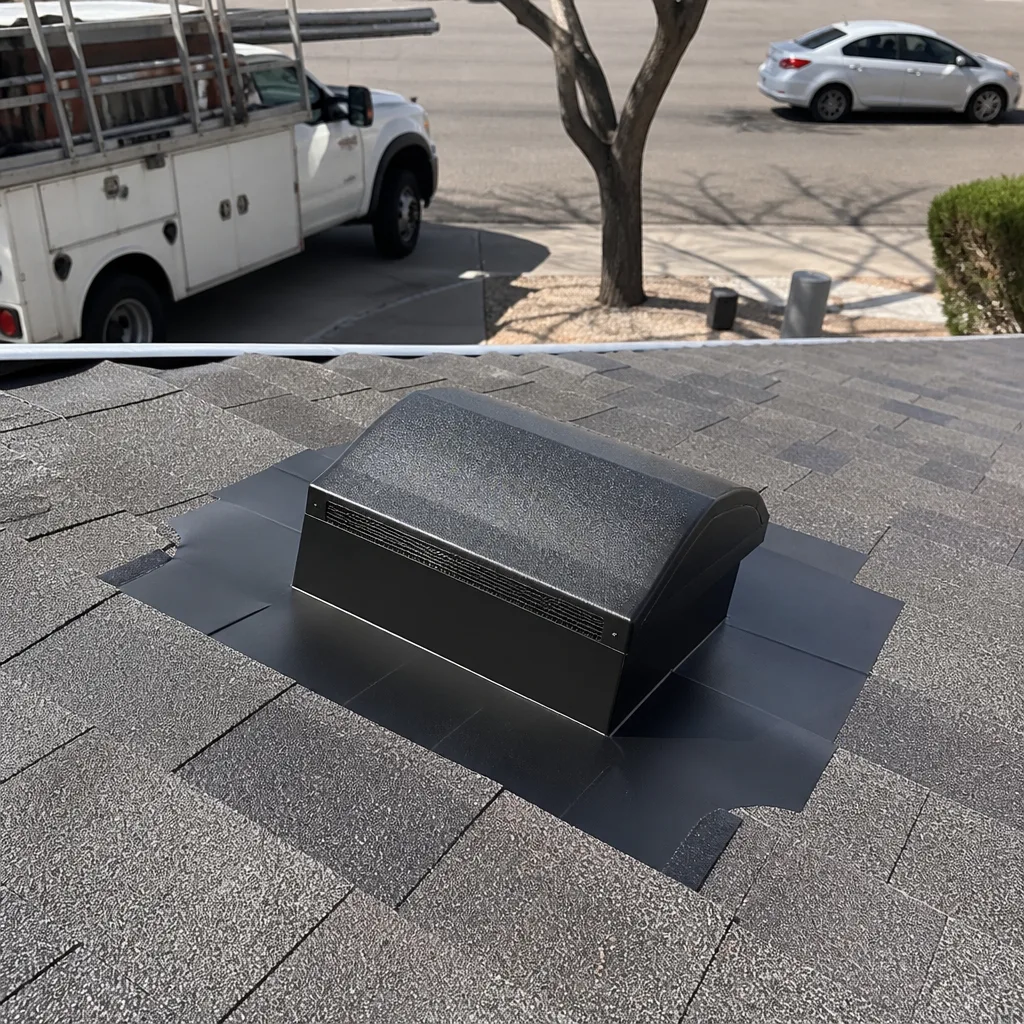 After
 Before
 After
When to Call a Professional
If you are looking at a roof leak, visible shingle damage, or a flagged home inspection report, and you do not know whether the existing roof was permitted, that is the moment to get a professional condition assessment. The same applies if you are planning a replacement and want to know whether your parcel’s FHSZ designation will change your material options. A roofing specialist who works in Victorville regularly already knows the county’s requirements, the inspection hold points, and the documentation the permit office expects. Oakmont Roof Repair offers free estimates in Victorville. Call (866) 942-0875 to schedule yours. We will tell you honestly whether you need a repair, a replacement, or just a better understanding of what your roof already has.
Frequently Asked Questions
Yes, a full roof replacement in Victorville requires a building permit from San Bernardino County. The permit triggers fire-hazard-zone review, Title 24 energy compliance checks, and a mandatory inspection sequence. Repairs covering a small, localized area are generally exempt, but any replacement of the full roof covering or any change in material type requires a permit. Call (866) 942-0875 if you are not sure which category your project falls into.
Expect to pay between $350 and $800 in permit and inspection fees for a typical single-family re-roof in Victorville, with larger or higher-value roofs trending toward $1,000. The county uses a valuation-based fee schedule, so the exact number depends on the declared project cost. These fees do not include contractor time for documentation and inspection scheduling.
A Fire Hazard Severity Zone is a CAL FIRE classification that determines fire-resistant construction requirements. Parts of Victorville fall within High or Very High severity zones, which means the county requires a Class A fire-rated roof assembly and a specific underlayment product. The zone designation is determined by your parcel, so two homes a mile apart can have different requirements.
An unpermitted roof will surface during the buyer’s home inspection and create a disclosure problem. The buyer can demand a retrofit permit, which requires exposing sections of the roof for inspection, or a price reduction. The total cost is typically two to five times what the original permit would have cost.
Title 24 cool-roof requirements apply to re-roofing projects, including full replacements on existing Victorville homes. The new roof covering must meet a minimum aged solar reflectance, which most light and mid-tone shingle colors from major manufacturers satisfy. Dark colors may not pass. Check the CRRC listing for the specific color before you commit.
Yes. A standalone roof inspection gives you a professional condition report on what your roof has, what it needs, and what the county will require if work is done. Oakmont Roof Repair offers free estimates in Victorville. Call (866) 942-0875 to schedule one.
The Bottom Line
California roofing permits are not a bureaucratic formality. They are the mechanism that verifies your roof meets fire code, energy code, and structural code before the next phase gets covered. In San Bernardino County, and specifically in Victorville, the system has real teeth: fire-hazard-zone requirements that vary by parcel, Title 24 compliance that varies by color, and inspection hold points that cannot be skipped without expensive consequences. If you are planning a roof project, get the condition assessed first, get the permit before any work starts, and hire a contractor who already knows the county’s sequencing. The savings from skipping the process are always paid back, with interest, at the worst possible moment.
Written by the team at Oakmont Roof Repair, serving Victorville since 2013.